ADA Portable Bathroom Rental: What Counts as an Easily Accessible System?
@johnathaniume313
When people ask about an ADA mobile commode leasing, they are typically really asking 2 concerns simultaneously. Initially, what does the regulation require? Second, what does authentic accessibility look like in the real world, when the washroom is being supplied to a jobsite, festival, church fair, park, or personal event?
Those are not always the exact same discussion, but they must be. An unit can be labeled as available and still create issues if it is placed in mud, obstructed by a visual, or pressed right into an edge where a wheelchair customer can not come close to the door. On the various other hand, some purchasers and occasion coordinators assume that any bigger mobile restroom counts as compliant, which is not exactly how ease of access works either.
The managing federal standard in the United States is the 2010 ADA Standards for Accessible Style, as translated by the Accessibility Board and the Division of Justice. That matters because "obtainable" is not an obscure marketing term. If you are arranging an ada mobile commode leasing, you are handling certain access policies that cover the unit itself, the entryway, the path to it, and the basic clearances a person needs to make use of it.
The very first point to recognize: bigger is not the same as accessible
I have actually seen lots of circumstances where someone points to an oversized unit and says, "That's the ADA one." In some cases they are right. Often they are not. Dimension alone does not work out the issue.
An ada obtainable portable washroom has to do greater than deal extra interior area. The unit needs to meet suitable toilet-room technological demands. That includes component clearances, transforming area, door maneuvering clearances, and the pertinent grab-bar and water-closet clearance regulations. It likewise should have an easily accessible entrance and remain on an accessible course. If a ramp or touchdown is required, that ramp or touchdown has to comply with ADA technological demands too.
That is why the expression ada certified portable restroom indicates something much more precise than "roomy." The regulation is interested in usage, not look. If a person can not come close to the unit, enter it, maneuver within, and make use of the fixture with the called for clearances, the truth that the covering looks large from the exterior does not solve the problem.
This is likewise where misunderstandings start. Rental clients often presume that the portable toilet business deals with all compliance by supplying the device. In technique, the service provider can supply an ada certified mobile toilet, but the site problems still matter. A compliant unit went down at an inaccessible location can still create an availability failure.
What the ADA is seeking in an obtainable portable unit
The most convenient method to think of an ada mobile restroom is to envision the user's full course from arrival to exit. The criteria do not focus on one separated attribute. They check out the entire sequence.
A certified system must be related to the International Symbol of Availability. That aesthetic marker is not simply decor. It informs customers which system is meant to offer accessibility, and it aids organizers reveal that they have designated the appropriate unit.
From there, the device needs an accessible route and an easily accessible entry. That seems basic until you see the number of temporary setups obtain it incorrect. A toilet placed past loosened crushed rock, deep grass, or a sudden degree change might be literally existing but not meaningfully obtainable. If a ramp or landing becomes part of the configuration, those elements have to abide by the ADA technological demands also. A makeshift board laid over a threshold is not the very same thing.
Inside the unit, the technological needs matter equally as much. The requirements need turning area, door maneuvering clearances, and fixture-related clearances. The grab-bar and water-closet guidelines additionally use. Those details exist due to the fact that gain access to relies on movement. A wheelchair customer might require space to turn, line up with the fixture, get to the door, and exit securely. A person using a walker or movement aid might also rely on those exact same clearances, even if their needs look various from individual to person.
That is the sensible heart of an ada compliant obtainable mobile restroom. It is not just an assigned box. It is a useful toilet area in mobile form.
How numerous obtainable systems are required?
This is one of one of the most typical rental questions, especially for event planners. The guideline from the Gain access to Board is clear for clusters of mobile single-user toilet devices: a minimum of 5 percent of the units in each collection should come. The Gain access to Board has also stated that this uses even at temporary events.
That factor catches individuals off guard. Momentary does not indicate exempt. If you are setting up a bank of mobile toilets for a weekend break occasion, the fact that the website will certainly be taken apart on Monday does not eliminate the accessibility commitment for the cluster.
Because the guideline is mounted as "a minimum of 5 percent," planners ought to resist the lure to treat the demand as a bare mathematics workout and absolutely nothing even more. The regulation develops a minimum. Genuine attendance patterns, website layout, and distribution throughout a large venue may raise sensible concerns that surpass the minimum matter. I am not including brand-new lawful guidelines there, just pointing out what any person that has worked a huge event learns rapidly: one available device positioned much from the activity can produce foreseeable challenge, even if someone feels they have actually inspected the box.
If you are renting out numerous financial institutions of units in various locations, it is wise to assume in terms of each cluster as opposed to the total number on the residential or commercial property. The confirmed typical particularly describes each cluster, which is where mistakes frequently happen. Someone looks at the whole event inventory, counts one ada portable bathroom someplace on the grounds, and thinks that is enough. The cluster-based regulation states otherwise.
Temporary occasions are not a totally free pass
People occasionally speak about festivals, fairs, races, and outdoor wedding celebrations as though the temporary nature of the celebration changes the accessibility analysis. For mobile washrooms, that assumption can be risky.
The Gain access to Board's guidance makes clear that the 5 percent accessible-unit requirement for collections applies even at temporary events. That implies the brief duration of the event does not get rid of the demand for ada certified portable restrooms. If guests are being invited to the website, ease of access has to become part of the washroom plan from the get go, not included after the trailers, fences, and food booths have already declared the degree ground.
In technique, momentary occasions typically create the hardest gain access to issues due to the fact that the site is set up promptly. The path that looked level throughout a preparation walk may come to be rutted after delivery trucks cross it. An unit placed on grass may be more challenging to approach after rainfall. A course that technically exists may become obstructed by stanchions, cords, or supplier storage. None of that transforms the regulating requirement. It simply shows why availability must be dealt with as an arrangement issue, not just a rental line item.
The obtainable route issues as high as the unit
This is where several or else sympathetic configurations fail. A certified ada-compliant portable commode can lose much of its worth if the technique to it is not accessible.
The ADA requirements, as translated by the Gain access to Board, call for an obtainable route and entrance. If you have actually ever before seen a visitor attempt to reach a mobile washroom throughout spun dust or navigate around barriers at a jampacked occasion, you know why that guideline exists. Accessibility is not only concerning what occurs after the door shuts. It begins prior to the individual gets to the threshold.
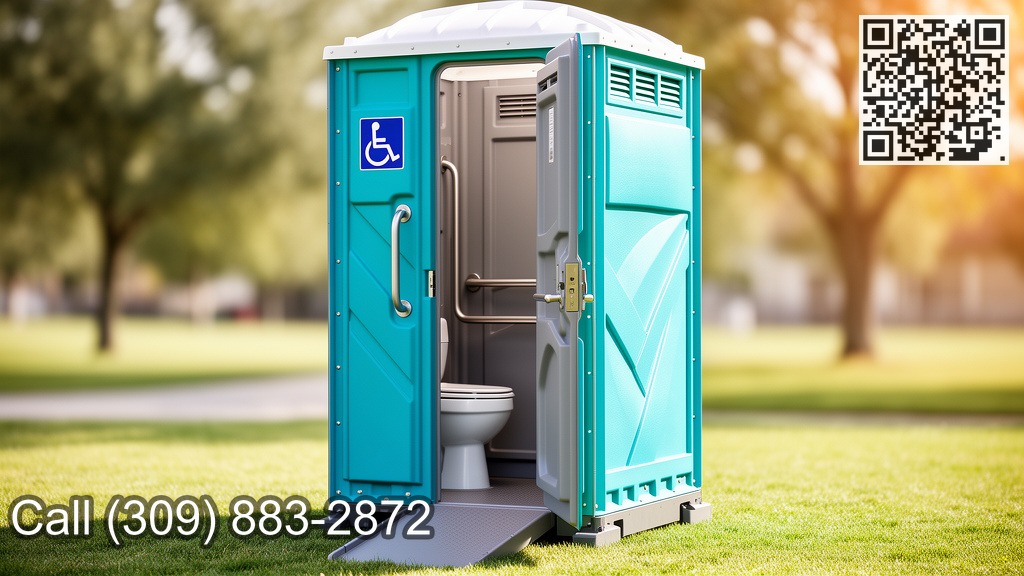
I have seen site strategies where the toilet carrier did their part and delivered the correct device, with the proper sign, but the final positioning by others weakened gain access to. The unit ended up behind a row of basic commodes, or angled so snugly against a fence that door navigating became difficult, or reached just by a course that tightened during arrangement. Those are not small oversights. They directly impact whether the restroom can be used.
For that reason, anyone setting up ada portable bathroom service should think about positioning with the exact same seriousness they offer to count and delivery timing. If a ramp or touchdown is required, those elements additionally need to adhere to ADA technological requirements. That is not an information to fix with scraps on the day of the event.
What "understood the International Symbol of Access" really means
The sign need may appear obvious, but it serves a crucial feature. An obtainable system must be identified with the International Sign of Availability. Without clear identification, customers might not understand which system is meant to satisfy access requirements, particularly in a long row of portable toilets where all the doors look similar at a glance.
The symbol also has an operational value for team and volunteers. On active sites, teams often repurpose, relocate, or enclose systems as problems alter. Clear recognition helps avoid the accessible device from being treated like any kind of various other spare delay. It needs to continue to be available and very easy to find.
There is additionally a depend on problem below. Individuals that need an ada handicap accessible portable restroom are typically forced to analyze accessibility from a distance before dedicating to a course. Clear identification assists them make that judgment quickly, without needing to check every device in the cluster.
Construction sites have a narrower exemption, and it is simple to misunderstand
This part is worthy of cautious phrasing since it is often duplicated incorrectly.
The ADA standards differentiate portable toilet systems at building sites that are made use of solely by building personnel. In the pointed out 1991 standard, those are exempt from the portable-toilet availability scoping demand. That is a narrower point than many people realize.
It does not indicate that all construction-related mobile commodes are outside availability regulations. It does not mean that basic mobile bathroom rentals are excluded. The confirmed context specifically claims that for general mobile bathroom rentals, the accessible-unit requirement remains.
In ordinary language, you need to be cautious regarding thinking that "it's a building and construction website" addresses the inquiry. The exception explained below is connected to portable toilet systems utilized solely by construction employees, and the source context specifies. Past that, it is finest not to make assumptions.
Marketing language can blur the picture
The portable hygiene sector makes use of a mix of phrases, some extra exact than others. You will certainly see advertisements for an ada portable bathroom, an ada compliant mobile bathroom, ada compliant portable commodes, or ada-compliant portable washrooms. Those terms might all be pointing towards the exact same basic idea, yet the legal concern is not the wording in the advertisement. It is whether the device and its installment meet the governing requirements.
That is why it assists to ask useful questions instead of relying on labels alone. Does the unit have the required access recognition? Does it supply the required clearances and turning space? Is the entrance accessible? Will certainly the course to the system remain available after delivery, secure fencing, and crowd control remain in place?
A vendor might regards explain an unit as ADA available since it is their bigger model. That may still leave important inquiries unanswered. The very same holds true of the phrase ada-compliant portable commode. It sounds definitive, yet conformity depends on both the unit and the method it is established on site.
A short rental-side fact check
When clients are trying to avoid blunders, I generally tell them to stop prior to delivery and validate a few essentials. This saves much more problem than attempting to reposition systems as soon as the site is active.
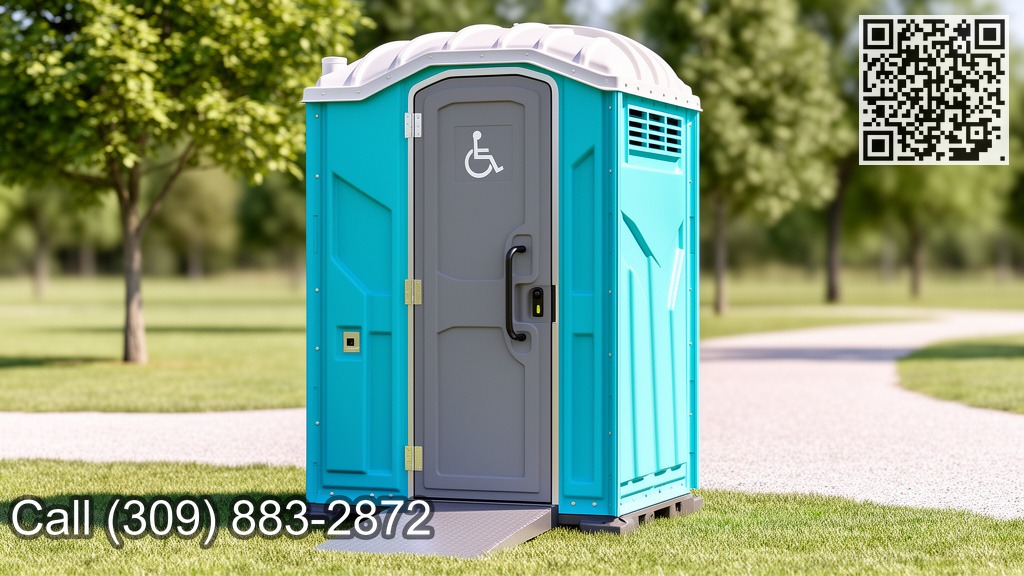
- Ask the amount of devices are in each collection, not simply the overall order.
- Confirm which device is the obtainable one and that it will lug the International Symbol of Accessibility.
- Walk the intended course prior to placement, especially if the ground problem may change.
- Check whether the entrance, and any type of needed ramp or touchdown, will satisfy ADA technical requirements.
- Recheck access after the rest of the website aspects are installed.
That is a list, but it covers the failings I see usually. None of it is glamorous, and all of it matters.
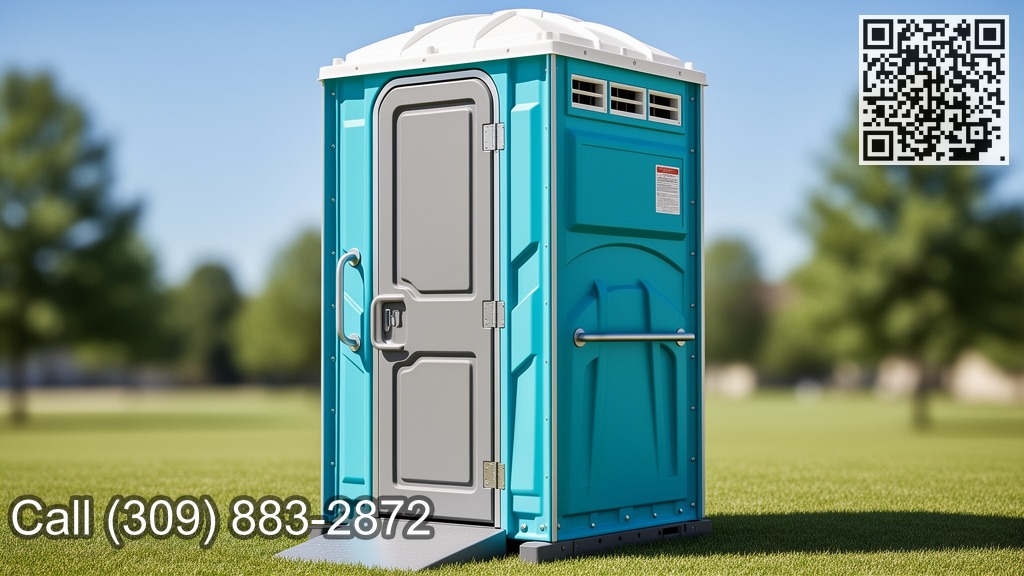
Why individuals obtain tripped up on "compliance"
Part of the complication comes from exactly how people utilize words "conformity" in everyday speech. They often mean, "Did we get the appropriate product?" The ADA standards ask a wider inquiry: "Can a person with a handicap actually use it under the conditions offered?"
That is why an ada compliant mobile toilet is never simply a product choice. It is also a positioning decision. It is path preparation. It https://riverepzi721.evercolumn.com/posts/ada-certified-portable-restrooms-transforming-area-and-clearance-basics is group monitoring. It is making certain the unit remains recognizable and reachable once the rest of the site completes around it.
The broader enforcement environment also matters. Availability is not fading right into the history. The Division of Justice's April 2026 guidance extending the deadline for certain state and city government web and mobile access rules to April 26, 2027 for larger entities is not regarding mobile bathrooms specifically, but it does mirror something crucial: ADA compliance continues to be active, visible, and very much part of exactly how organizations are anticipated to run. To put it simply, availability is not an old box to check and fail to remember. It is a continuing obligation across settings.
That more comprehensive atmosphere should encourage far better habits on the ground. If an organization is taking notice of digital access, public access, and physical accommodations elsewhere, then bathroom gain access to at a momentary occasion or public-facing website should be treated with the very same seriousness.
Common edge cases that should have actual thought
The ADA requirements provide the framework, yet actual sites produce judgment calls. A sloped field might practically provide sufficient open room for toilet placement, yet still complicate the obtainable route. A parking area may be close to the commode cluster but separated by momentary barriers. A huge venue may fulfill the minimal accessible-unit count overall while still leaving one collection without accessibility where individuals in fact gather.
These are not debates versus the standard. They are pointers that the typical demands careful application.
One example that turns up typically is the "last-minute move." A system is provided to a level location, then shifted later to include a stage extension, catering tent, or equipment decline. The relocation appears minor to the staff directing traffic, however it can influence navigating clearances or the route to the entryway. An additional instance is the "weather condition modification." A route that was convenient at configuration ends up being challenging after rainfall. Momentary websites are vibrant, which is why access needs to be checked, not simply developed on paper.
The expression ada mobile commode needs can sound completely dry, yet behind it are daily acts of preparation and respect. It indicates planning ahead so a guest, guest, employee, or site visitor is not left improvisating with dignity on the line.
When one accessible system is inadequate in practice
The legal minimum for collections is something. Practical adequacy can be one more. Without designing additional legal guidelines, it is still fair to claim that relying upon a solitary easily accessible unit for a big or widely spread out occasion can create stress points. If that device is occupied, out of service, or tough to reach from essential locations, the customer bears the burden.
That is where experienced planners reveal judgment. They do not just ask, "What is the least we can do and still matter as certified?" They ask, "Will this setup really help the people coming below?" That attitude tends to create better outcomes throughout the board.
It additionally reduces friction during the event. Staff invest less time handling issues, redirecting guests, or trying to deal with placement after the reality. A lot more significantly, attendees with specials needs can navigate the site with less uncertainty. That is typically the distinction in between being practically consisted of and genuinely welcomed.
What to keep in mind when you listen to "ADA unit"
If somebody supplies you an ada certified portable bathroom, do not quit at the label. Analyze the whole image. The device needs to be identified with the International Symbol of Accessibility. It should have an accessible course and entryway. Any needed ramps or landings must comply with ADA technological requirements. The interior needs to meet the suitable technological rules for transforming room, navigating clearances, component clearances, and grab-bar and water-closet clearances. And if the system becomes part of a collection of mobile single-user bathrooms, at the very least 5 percent of that collection have to come, even at a short-term event.
That may sound like a great deal to track, yet the underlying idea is simple. An easily accessible mobile washroom is one that an individual can locate, reach, enter, utilize, and departure with the clearances and includes the ADA needs. Not simply theoretically, and not simply in the vendor summary, but in the actual place where it is rented and used.
For anybody setting up an ada portable commode rental, that is the conventional worth holding onto. Availability is not a courtesy upgrade. It becomes part of making the website usable for everyone that is meant to be there.
 Ask ChatGPT
 Ask Grok
 Ask Perplexity
 Ask Claude
 Ask Google AI
 Ask You