ADA Obtainable Portable Bathroom Rental and Necessary Accessibility Features
@johnathaniume313
Renting a portable washroom sounds straightforward until accessibility enters the image, and after that it ends up being something more important than a line thing on an event plan or jobsite list. It ends up being a question of whether every visitor, participant, employee, or visitor can in fact use the centers with dignity.
That is where an ADA available mobile bathroom issues. Not as a politeness, and not as a nice extra, yet as component of making a short-term site feature genuine individuals with actual movement requirements. I have seen coordinators put real treatment right into auto parking, signs, food solution, and group circulation, then treat bathroom accessibility as a second thought. That normally leads to final rushing, unpleasant placement, or a device that technically got here on site but is practically unusable due to the fact that the ground is soft, the technique is obstructed, or the door clearance is endangered by bad setup.
The good information is that the governing framework is clear on the huge factors. In the United States, the managing government access standard for portable toilet leasings is the 2010 ADA Criteria for Accessible Style, as interpreted by the Accessibility Board and the Department of Justice. If you are setting up temporary cleanliness for an event or public-facing website, that criterion is the place to start.
The first point to understand concerning available portable bathroom rentals
People usually search for expressions like ada mobile commode leasing, ada available portable bathroom, or ada certified mobile washrooms due to the fact that they desire one fast response. Typically the inquiry underneath is, "What am I in fact needed to supply?"
For clusters of mobile single-user toilet devices, at least 5 percent of the devices in each cluster have to be accessible. The Gain access to Board has actually made clear that this applies even at momentary occasions. That solitary point answers a shocking number of rental questions.
If you rent out a financial institution of devices for a reasonable, event, wedding event, showing off occasion, fundraiser, or public celebration, you do not satisfy access by positioning standard systems in a row and thinking one will certainly do. The obtainable demand uses within the cluster itself. The accessible unit additionally requires to be functional in method, which suggests the route to it and the access into it matter just as long as the label on the outside.
There is one subtlety that journeys people up. The ADA requirements differentiate portable commode systems at building and construction websites that are used specifically by building and construction workers. Those are cured differently under the pointed out 1991 requirement's portable-toilet availability scoping regulation. But that restricted difference should not be extended beyond what it claims. For general mobile toilet services, the accessible-unit requirement remains the vital guideline to focus on.
That difference issues due to the fact that many people hear "building and construction site exception" secondhand and think mobile washrooms are extensively excluded. They are not. If the units are serving the general public, event guests, or basic site individuals, availability still requires to be addressed.
What makes an ADA compliant mobile toilet greater than just a bigger unit
A lot of rental listings make use of terms like ada compliant portable bathroom, ada-compliant portable toilet, or ada handicap easily accessible portable toilet somewhat freely. From a practical standpoint, dimension alone is not enough.
An easily accessible mobile washroom need to satisfy technical requirements that apply to bathroom areas. Those consist of component clearances, turning space, door maneuvering clearances, and suitable grab bar and water storage room clearance policies. The accessible unit should likewise be related to the International Symbol of Accessibility.
That implies the concern is not only, "Is this a wider mobile toilet?" It is additionally, "Does this system offer the needed inside capability?" If a person using a wheelchair can not come close to the fixture correctly, turn inside the system, or maneuver with the door with enough clearance, then the user experience falls short also if the supplier's brochure calls it accessible.
This is why seasoned coordinators ask far better questions of suppliers. Not simply "Do you have ADA systems?" but "Is the device designed to meet ADA toilet-room technological needs?" and "What do you require from us on website so the obtainable route and entrance remain certified?"
Those two questions tend to disclose whether you are taking care of a vendor who understands conformity or one that is just duplicating a product label.
Placement is where good intents frequently drop apart
I have seen an ada mobile toilet delivered to the edge of an area because it was the most convenient place for the vehicle to drop it. Theoretically, the device existed. Actually, the course to it crossed rutted grass and a slope that would certainly test lots of ambulatory guests, not to mention somebody making use of a movement device.
The criteria do not stop at the system. Portable accessible systems have to have an available course and entry. If ramps or landings are required, those additionally need to comply with ADA technological needs. That information is not minor. It is frequently the distinction between meaningful accessibility and symbolic access.
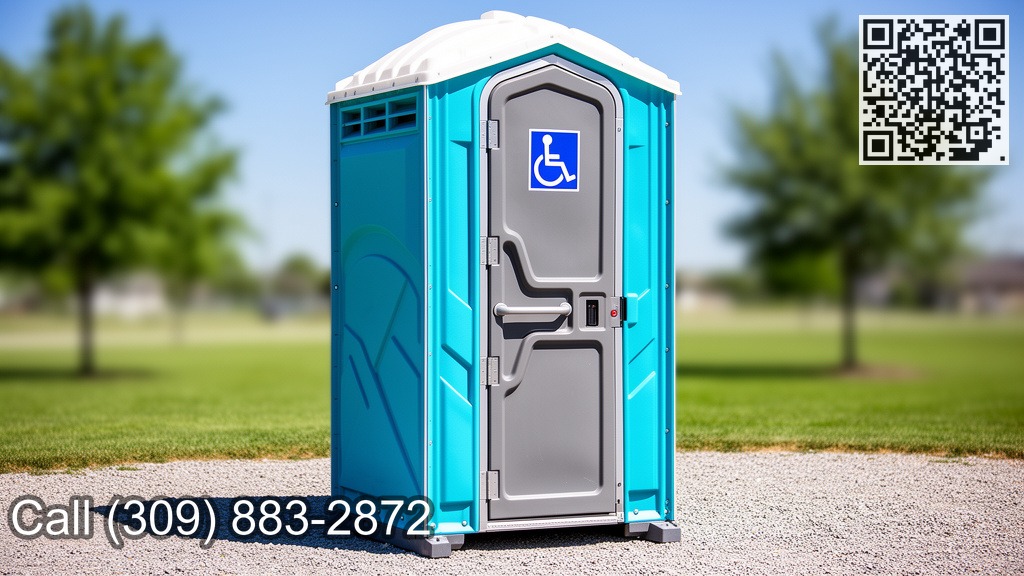
This is where event producers and site supervisors have to decrease. A portable system can be perfectly produced and still come to be unusable because of the ground conditions around it. Mud, loosened crushed rock, soft grass, abrupt level changes, momentary fencing, cable covers, generator cords, and crowd-control barricades can all hinder gain access to. None of those obstacles feel remarkable when the website is vacant at 7:00 a.m. During real usage, they become very real.
When I chat with people intending washroom placement, I typically urge them to visualize the complete journey instead of the system alone. Someone needs to find the restroom, traveling to it, get to the door, enter, maneuver inside, and leave safely. If any type of one of those actions breaks down, the arrangement is refraining from doing its job.
Accessibility proportions are basic, but preparation is not
The 5 percent regulation sounds straightforward, and mathematically it is. Operationally, it requires judgment.
If you have a solitary cluster of mobile single-user units, https://johnathanflsx132.stonefielddigest.com/posts/ada-obtainable-portable-toilet-rental-what-accessibility-requirements-apply at least 5 percent of that collection need to be accessible. If your website has numerous clusters, the need applies to each cluster as opposed to to the site as one huge pooled number. That information matters on vast residential properties. I have actually seen organizers presume they can position all available units in one main location and count them against the entire site. That can leave far-off washroom financial institutions without an accessible option where people really need one.
Even when the math functions, circulation issues to individual experience. A visitor ought to not need to cross the complete impact of a fairground or occasion location because the only ada compliant accessible portable toilets were focused in the incorrect location. The standards inform you the minimum scoping guideline. Great planning includes sound judgment to that minimum.
Here is a short useful framework that often tends to stop one of the most common errors:
- Count each cluster independently and ensure a minimum of 5 percent because collection are accessible.
- Confirm the system will certainly be marked with the International Icon of Accessibility.
- Inspect the course from the primary blood circulation course to the unit prior to the vendor leaves.
- Check whether ramps or touchdowns are required, and if they are, make sure they comply.
- Recheck access after secure fencing, staging, generators, and group controls are installed.
That small amount of self-control solves issues that are pricey and embarrassing to take care of after opening.
Why the accessible course is entitled to as much attention as the bathroom itself
People in some cases listen to "accessible route" and picture an abstract design term. On momentary websites, it is very concrete. It is the path a genuine person will certainly need to take a trip under real problems, which might consist of weather condition, crowds, devices, and uneven terrain.
An ada compliant mobile toilet can stop working in method if the course to it is obstructed or unstable. I have seen this take place at community events where the bathroom was placed behind a merchandise outdoor tents, at institution features where expansion cords crossed the strategy, and at outdoor gatherings where rainfall transformed a decent-looking course right into deep mud in less than an hour.
The technological guidelines for course, entrance, ramps, and landings are there for a reason. Short-term does not indicate optional. As a matter of fact, short-term setups frequently need even more focus due to the fact that a lot of pieces are set up swiftly and altered at the last minute.
There is additionally a human side to this that obtains missed. When accessibility falls short at a bathroom, the user is put in a particularly awkward position. They are commonly much from home, based on a crowded event format, and handling a fundamental physical need that can not simply be held off. That is why an understanding method issues below. The aggravation is not theoretical.
The language vendors make use of can be confusing
Search outcomes are crowded with expressions like ada compliant portable commodes, ada-compliant mobile toilets, ada portable commode, and ada compliant mobile bathroom. Some listings are careful and informed. Others are little greater than marketing shorthand.
If you are renting, the best strategy is to separate item language from conformity concerns. A supplier calling a device an ada portable toilet does not ease the renter or site driver from verifying that the setup pleases the accessibility requirements that really apply. The system must be recognized properly, and it must have the required route, entry accessibility, and appropriate toilet-room features.
That may seem apparent, yet it obtains overlooked in fast-moving logistics. A planner might presume the rental firm is handling whatever. The rental firm may presume the site group is dealing with ground prep work and route access. After that the occasion opens up and neither side has inspected the information that matter most.
The better rental conversations are specific. Ask what the unit is made to fit. Ask exactly how recognition is taken care of. Ask what site problems are required. Ask that is in charge of positioning and path readiness. Clear obligation avoids finger-pointing later.
Temporary events are not outside the rules
This point deserves its own area due to the fact that it remains among the most common misunderstandings. Some coordinators still think that because an event lasts someday, one weekend break, or one week, the ease of access expectations are loosened up. For portable toilet collections, they are not. The Accessibility Board claims the 5 percent accessible-unit demand uses even at short-term events.
That issues for festivals, races, public celebrations, outside performances, charity strolls, seasonal destinations, and community celebrations. The much shorter timeline does not remove the ease of access obligation. If anything, short-lived events need tighter focus because they are put together promptly, often on incomplete sites, and usually by teams handling lots of vendors at once.
I have actually noticed that the occasions that do this finest do not deal with ease of access as a specialized problem. They cook it into regular website procedures. The washroom supplier is knotted in very early. The easily accessible route is considered throughout format, not after secure fencing increases. The easily accessible device is placed near real attendee flow instead of in remaining room. Somebody on website is designated to walk the path and examine it during the event.
That kind of planning hardly ever looks significant from the exterior. It simply really feels smooth to the people that require it.
Construction sites require a more careful reading
Construction is where discussions concerning portable restroom access can obtain muddy. The verified context is specific: portable toilet systems at construction sites made use of exclusively by building and construction personnel were treated differently under the mentioned 1991 standard's scoping regulation. That does not produce a blanket masquerade every site with a construction hat on it.
If a task group is trying to comprehend whether a certain configuration gets approved for that difference, it deserves decreasing and reading the suitable guideline carefully rather than relying upon assumptions. The phrase "used specifically by building and construction workers" lugs weight. Once a site or part of a website serves wider customers, the analysis changes.
From a threat and preparation viewpoint, this is an area where broad generalizations can create trouble. Many mixed-use settings do not fit neatly right into one of the most limited analysis of a construction-only exemption. If the website involves public access, customer visits, sales task, or other non-construction usages, you must not delicately assume that an exception designed for a narrow context applies across the board.
Accessibility conformity belongs to a broader enforcement climate
Another reality worth keeping in view is that availability conformity is not diminishing right into the history. It sits inside a bigger environment of recurring ADA task and enforcement. One indicator of that more comprehensive climate is the Department of Justice's April 2026 advice expanding the target date for sure state and city government internet and mobile availability rules to April 26, 2027 for bigger entities.
That support is not regarding mobile toilets particularly, yet it does mirror a bigger fact. Accessibility commitments are energetic, visible, and progressively part of operational planning across fields. For site operators, communities, institutions, public agencies, occasion organizers, and professionals, that broader context ought to be a suggestion not to deal with physical accessibility as a box to check only if somebody complains.
The companies that manage accessibility well normally have a regular state of mind across everything they do. They do not different electronic gain access to, path planning, signs, and centers access right into unconnected silos. They recognize that access is experienced by a person as one continuous chain.
What occupants ought to confirm before the truck arrives
An unusual amount of tension can be prevented with a short pre-delivery testimonial. The point is not to come to be a code professional over night. It is to see to it the problems on site will permit the easily accessible unit to operate as intended.
The most helpful questions are simple and sensible:
- How numerous collections will certainly get on website, and does each cluster include the called for available percentage?
- Where specifically will the easily accessible devices be put about main blood circulation paths?
- Will the systems be noted with the International Icon of Accessibility?
- Is the ground secure enough to support an available route and entry?
- Are any kind of ramps or touchdowns required, and if so, that is in charge of ensuring they comply?
That list is short due to the fact that it needs to be useful. Lengthy compliance discussions are typically less efficient than 5 clear questions asked early sufficient to act upon the answers.
The most common error is dealing with access as a specialized add-on
If I had to boil years of mobile bathroom planning issues to one pattern, it would certainly be this: a lot of groups think about the accessible device as a separate point instead of as component of the basic washroom plan.
They rent the basic units initially, choose where the crowd will certainly be 2nd, finalize secure fencing and tools placement 3rd, and only then ask where the ada certified mobile bathroom can fit. By that point, the available system is being pressed into remaining area, normally with a compromised route.
A much better strategy is to put the obtainable system initially throughout planning, after that build the rest of the bathroom cluster and surrounding layout around that decision. It appears small, yet it transforms whatever. The course is more clear. The entry is much less likely to be obstructed. The device is less complicated to locate. The supplier has less last-minute guidelines. The user has a much better experience.
That is what good ease of access work commonly appears like. Not flashy, not complicated, simply intentional from the beginning.
Dignity is the actual common individuals remember
Most people going to an event or checking out a short-lived website will never consider the technical language behind an ada-compliant mobile toilet. They will merely discover whether they can make use of the washroom individually or not.
That is the component that often tends to stick with me. Compliance language matters because it supplies a structure, yet the lived experience is what gives it suggesting. An individual either gets to the unit, gets through the door, has enough room to maneuver, and uses the component with self-respect, or they do not.
When renters and organizers comprehend that, their choices improve. They ask far better questions. They put systems much more attentively. They evaluate the route. They withstand the temptation to treat access as a final accommodation. And they stop thinking that a larger portable bathroom automatically addresses the issue.
If you are preparing an ada portable bathroom rental, the standard to aim for is not merely having an accessible-looking unit on the invoice. It is creating a configuration that works in the genuine problems of your website. The 2010 ADA Criteria for Accessible Style, along with the Access Board and DOJ analyses, offer you the governing framework. From there, the work is functional and human: supply the necessary variety of obtainable units in each cluster, recognize them effectively, ensure the route and entrance are accessible, and protect the clearances and maneuvering area that make the device usable.
That is what turns an ada obtainable portable bathroom from a product group into actual access.
 Ask ChatGPT
 Ask Grok
 Ask Perplexity
 Ask Claude
 Ask Google AI
 Ask You