ADA-Compliant Portable Toilet Rental: Recognizing Fixture Clearance Rules
@johnathaniume313
When a person requests for an ADA-compliant portable toilet, they are typically attempting to fix an extremely practical issue under time pressure. A festival coordinator requires sufficient restrooms before gateways open. A wedding organizer is trying to make a rural place work for every guest. A website superintendent needs to work with distributions on uneven ground. In each case, the word "available" can obtain lowered to a checkbox as well quickly.
That is where fixture clearance policies matter.
An available device is not merely a bigger box with a wheelchair icon on the door. For an ada portable commode rental to function as meant, the interior has to support real motion, real transfers, and actual usage. Individuals require room to approach the commode, turn, setting themselves, make use of grab bars, and open or shut the door without battling the layout. If that clearance is missing, the restroom might look certified from ten feet away and still fail the individual that really needs it.
I have seen this misconception turned up in planning discussions repeatedly. A person states, "We bought the handicap system, so we are covered." Sometimes they are. Often they are not, especially if the device is obstructed by soft ground, crowded too tightly against other units, or provided in a location where the entryway and bordering room can not be utilized safely. The information around clearance are what divide a simply supplied unit from an in fact functional one.
What the ADA is actually asking for
For mobile bathroom leasings in the USA, the governing federal structure is the 2010 ADA Criteria for Accessible Layout, as analyzed by the Department of Justice and the Access Board. Those requirements do not treat accessibility as a matter of signs alone. They check out the whole experience of using the bathroom room.
For portable units, that indicates an ada available portable restroom must do greater than exist on paper. It should have an accessible course and entry. If ramps or touchdowns are required, those have to follow the ADA technical needs too. Inside the system, the toilet space technological demands still matter. That consists of turning room, door navigating clearances, fixture clearances, and the appropriate policies for grab bars and water-closet clearances.
The phrase "component clearance" appears technical, yet the concept is human. A fixture can not be put so snugly that a customer can not get to it, line up with it, or use it individually. The obtainable bathroom requires open space around it that works with wheelchair tools and the user's body placement. In a long-term structure, individuals expect these regulations to apply. In momentary settings, they matter just as much, often a lot more, since the website itself frequently adds obstacles.
That is why an ada compliant portable toilet is not almost what is built into the covering of the unit. Positioning, spacing, and strategy conditions are part of whether the toilet is absolutely accessible.
Clearance is not added space for its own sake
People often photo availability policies as arbitrary spacing policies created by board. In the field, you see very quickly why they exist.
Imagine a visitor getting to an outside event making use of a wheelchair. They reach the bank of bathrooms and locate the ada mobile restroom on completion, which is excellent. The sign shows up, also great. Yet the ground before the door is rutted, or the ramp area squeezes right into a fence line, or one more device was positioned so close that the door swing becomes unpleasant. Inside, there may practically be more room than in a typical unit, however if the individual can not steer at the entrance or can not place correctly near the bathroom fixture, the bigger impact does not aid much.
Fixture clearance rules sustain a number of activities that have to take place smoothly. A user may require to go into, transform, approach the toilet from a certain angle, transfer, maintain with grab bars, and turn around the procedure without hitting walls or hardware. Door steering clearances issue since opening and closing a door from a seated setting can take more space than several organizers understand. Transforming area issues because not everyone can back in or pivot in a tight rectangular shape. Grab-bar and water-closet clearances matter due to the fact that assistance just functions when the fixture and the surrounding room are coordinated.
This is why knowledgeable rental teams do not chat only about system matter. They ask where the system will rest, just how people will certainly approach it, and whether nearby obstacles will reduce the useful clearance around the entrance.
The 5 percent regulation is the beginning point, not the coating line
For clusters of portable single-user bathroom systems, at the very least 5 percent of the systems in each cluster must be accessible, and this uses even at short-lived events. That number is necessary, however it is simple to misunderstand.
First, the policy applies by cluster. If restrooms are divided throughout different locations on a site, you can not necessarily make one location obtainable and ignore the others. Each collection needs its available share. Second, 5 percent is a minimum scoping demand. It responds to the amount of obtainable systems are needed in a collection, not whether every one is positioned and set up in a way that maintains called for clearances.
I often tell planners to consider the count and the clearance as 2 different gates. If you miss out on either one, the user still loses.
This matters at occasions where mobile washrooms are installed late at the same time. Suppliers arrive, fencing changes, catering camping tents increase, power cables show up, and suddenly the obtainable device is no longer on an available course. Nothing about the shell transformed, yet the device came to be less useful. Theoretically, the coordinator still has an ada compliant obtainable portable restroom In method, the course and clearance can be jeopardized by everything put around it.
Why fixture clearance troubles turn up so frequently in momentary setups
Temporary occasions and short-term work websites create a perfect tornado for clearance issues. The device itself may be manufactured to support availability, yet the website problems are much less controlled than in an irreversible building.
Ground conditions are the very first problem. If the obtainable path crosses mud, loosened gravel, soft lawn, or a sloped spot that was never properly prepared, the route to the unit can end up being the restricting factor before the customer also reaches the doorway. The requirements need an obtainable path and entryway, and that need is equally as genuine as anything inside the restroom.
The 2nd problem is crowding. Mobile bathroom collections are usually placed where area is left over, not where space is best. On a busy site, that may suggest tucking systems near storage, obstacles, secure fencing, phases, dumpsters, or utility trailers. Every one of those decisions can influence method and maneuvering space. A compliant unit can end up being tough to utilize if the bordering setup swipes the clearance people need.
The third issue is assumptions. Several buyers think that buying one ada handicap easily accessible mobile restroom resolves the trouble generally. Rental providers often assume the consumer understands where and how the device ought to be placed. When both sides think, no person confirms the details.
That is why the most effective discussions take place prior to delivery, not after the truck leaves.
What fixture clearance covers inside the unit
The criteria require mobile obtainable units to fulfill toilet-room technical requirements, including fixture clearances, transforming area, and door maneuvering clearances, plus suitable grab-bar and water-closet clearance policies. Even without estimating measurements below, the framework of the requirement informs you what to look for.
Turning area addresses whether an individual utilizing a mobility gadget can reorient within the washroom. In a cramped format, a customer might be able to enter however not transform properly enough to use the fixture.
Door maneuvering clearance addresses whether the entrance can actually be made use of under actual problems. A door that opens up right into an unpleasant path, or hardware placed in a manner that requires a difficult reach or angle, can defeat availability even if the interior impact appears generous.
Fixture clearance around the bathroom addresses the useful room required to strategy and transfer. This is not ornamental empty room. It is the working area that makes the component functional.
Grab-bar and water-closet rules matter since assistance functions just help when they are coordinated with the fixture place and the surrounding clear space. A grab bar is not an accessory. It needs to connect properly to the customer's body position and the fixture placement.
These demands are why a real ada compliant portable restroom must never ever be explained just as "larger than criterion." Bigger is not the lawful or dry run. Useful clearance is.
A common error: focusing on the system and neglecting the route
One of one of the most common field blunders is focusing on the device itself while neglecting the course to it. The criteria are clear that portable obtainable devices must have an accessible route and entrance. If a ramp or touchdown is required, that likewise needs to follow the technological requirements.
This appears apparent until you watch a configuration unfold. The shipment crew puts the ada-compliant mobile toilet on a slight increase since the reduced area might flooding. After that the occasion group runs temporary fence around the bathroom bank to regulate web traffic. After that a generator cable cross the easiest path. No single option appears remarkable. Together, they can make the path discouraging or unusable.
I have actually also seen accessible units positioned at the back of a long row where foot traffic naturally traffic jams. People waiting in line collect directly in front of the entrance due to the fact that no one thought about circulation. The device still bears the access sign, as required, however the customer now needs to ask strangers to move simply to get to the door. That is a preparation issue, not a manufacturing problem.
A good ada mobile commode rental requires a person to think through the route from arrival to exit, not just the things delivered to the site.
Identification issues, but it is just one part of compliance
Accessible portable commode systems must be understood the International Icon of Availability. That is very important because customers require to locate the system without presuming. Clear identification assists staff, visitors, inspectors, and attendees all understand which unit is intended to serve accessible needs.
But signage can develop incorrect comfort if the planning stops there. A symbol on the door does not treat a bad route, a blocked entrance, or compromised clearance at the fixture. In real usage, individuals experience accessibility as a chain. If one link falls short, the sign alone does not recover self-respect or independence.
That may seem candid, yet it is worth stating because several disagreements start with, "We purchased the marked unit." Yes, which was necessary. It was not sufficient.
The construction-site question that creates confusion
Construction websites typically bring up a separate factor. There is a distinction in the ADA requirements entailing mobile commode systems at construction sites that are used exclusively by construction workers. Those devices are excluded from the portable-toilet accessibility scoping requirement referenced in the 1991 criterion. That restricted context triggers complication since individuals hear "building site" and think available portable commodes never ever apply there.
That is as well broad.
For general mobile bathroom services, the accessible-unit need stays. The most safe sensible method is to be extremely clear about the setting and the intended users. If the commodes are for a basic occasion, public usage, or another context outside that slim exception, ease of access scoping continues to be significantly in play. If a task team is depending on an exception, that choice ought to never ever be laid-back or based on hearsay.
I mention this due to the fact that I have actually seen coordinators borrow presumptions from one setup and paste them onto another. That is exactly how errors happen.
Questions worth asking prior to delivery
The easiest availability troubles to take care of are the ones caught https://pristineportablesil.com/galva-il/ before the truck is dispatched. As soon as the system is on site and the event clock is ticking, everybody is attracted to improvise. A brief testimonial in advance saves stress later.
- How several portable toilets remain in each collection, and does each collection include the called for available share?
- Where is the easily accessible route to the device, and will certainly that path remain functional after fencing, hosting, and energies are installed?
- Is the entry area being left clear enough for door handling and approach?
- Will neighboring items reduce the sensible clearance around the unit after delivery?
- Is the accessible system plainly identified with the needed symbol?
These are simple inquiries, yet they capture an unexpected variety of troubles. They also change the discussion from "Did we buy one?" To "Can an individual in fact use it?"
What renters and website managers need to view on arrival day
Delivery day is when a lot of excellent intents either hold up or fall apart. This is the moment to take a look at the accessible device in context, not in isolation.
If the ada certified mobile toilets are being set as a collection, check the surrounding room before the motorist leaves. Stroll the path as if you were showing up fresh to the site. Look at the ground. Take a look at pinch factors. Take a look at where people are likely to collect. Stand in front of the door and ask whether there is enough useful handling room, not just theoretical vacant space.
One occasion supervisor I worked with had the ideal instinct. Before sign-off, she made every vendor stand still for five minutes while she inspected the restroom location after all other equipment had actually been presented. It really felt picky at the time. It became wise. A food catering prep table had wandered right into the strategy area, and a momentary waste container had actually been positioned along the clearest route. Neither obstruction would certainly have been observed by someone focused just on delivery counts. That fast pause protected against a very noticeable availability failure.
The lesson is easy. Clearance is vibrant on a short-term site. It can be shed after delivery if no one secures it.
Compliance lives in a wider setting now
Accessibility enforcement is not tightening. It is broadening throughout markets. A current example outside the portable bathroom context is the Division of Justice advice prolonging the due date for sure state and local government internet and mobile ease of access rules to April 26, 2027 for larger entities. While that advice deals with electronic availability, it mirrors a more comprehensive conformity environment: ease of access obligations are active, noticeable, and increasingly part of typical operational risk.
For coordinators, locations, and public-facing entities, that broader setting matters. It implies availability needs to not be dealt with as a politeness add-on or a late-stage scramble. Physical gain access to, consisting of ada-compliant mobile restrooms, belongs in the very same planning classification as security, insurance, group monitoring, and vendor coordination.
There is likewise a human factor to care, apart from compliance. When somebody reaches an occasion or website and discovers that the accessible toilet is genuinely useful, they observe. Regularly, they observe when it is not.
Choosing the best state of mind for an ADA mobile bathroom rental
If I had to reduce this subject to one sensible principle, it would be this: lease for use, not for appearance.
An ada mobile restroom should be selected and placed with the user's activities in mind. That indicates valuing the standards around obtainable path, entry, transforming room, door navigating clearances, component clearances, and the applicable grab-bar and water-closet rules. It additionally suggests meeting the scoping need for collections, which goes to least 5 percent available devices in each collection of mobile single-user toilets, including at short-term events.
When people buy an ada-compliant portable toilet, they occasionally ask whether they can conserve space by squeezing it right into a tighter corner, or whether one device can "cover" numerous toilet banks spread out around a website. Those are the incorrect instincts. Access is not a token unit parked wherever it fits. It is a collection of conditions that need to work together.
That is why the most effective ada compliant available mobile restrooms are not just rented, they are intended. The device is recognized appropriately. The path is usable. The entrance is convenient. The surrounding layout protects clearance rather than stealing it. The result is not fancy. It simply functions, which is exactly the point.
For anyone organizing an ada certified portable bathroom rental, that is the actual test. Not whether the documents claims accessible. Not whether the sign is printed on the door. Whether an individual that requires the restroom can approach it, enter it, maneuver inside it, utilize the fixture with dignity, and leave without unneeded barriers.
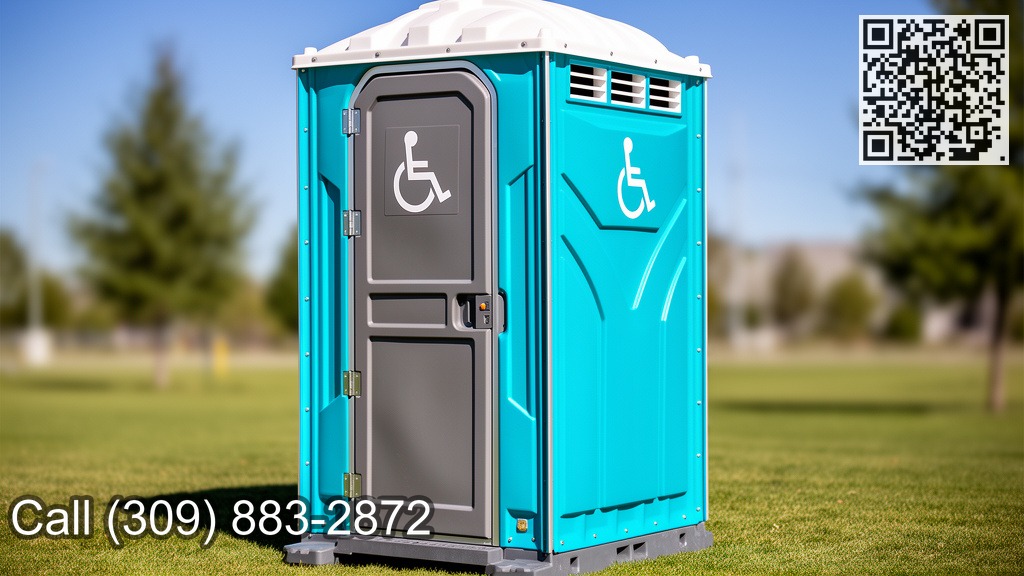
That is what component clearance policies are trying to safeguard. And when you understand them that way, they quit seeming like technical fine print and begin looking like what they are: the distinction in between small access and real access.
 Ask ChatGPT
 Ask Grok
 Ask Perplexity
 Ask Claude
 Ask Google AI
 Ask You